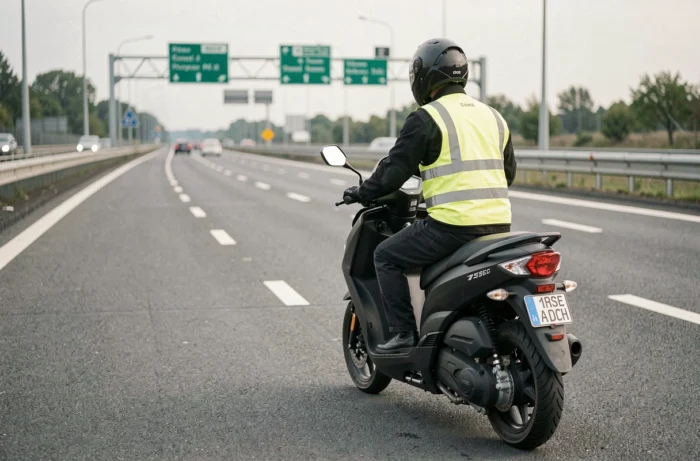
On an access ramp, a 125 scooter struggling to merge into traffic due to a sluggish engine or under-inflated tire is the kind of situation that can go wrong in a matter of seconds. Riding a scooter on the highway is legal under specific conditions, but legality doesn’t solve everything: the reduced size, exposure to crosswinds, and limited power require a preparation that many riders underestimate.
Stability and engine power: what the highway really demands from a scooter
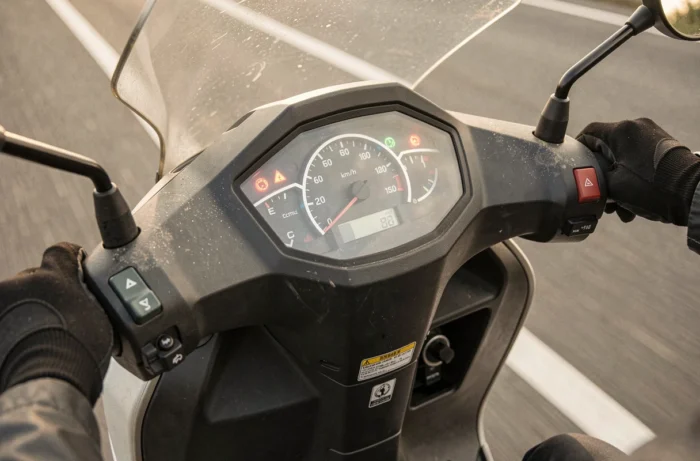
The rule of a minimum speed of 80 km/h to access the highway is well-known. What is less measured is the difference between “being able to reach 80 km/h on flat ground” and “maintaining a stable speed of 110 or 130 km/h with crosswinds and a passenger.”
A 125 cm³ scooter generally reaches the required minimum speed, but running at full throttle continuously wears out the engine and reduces reaction capacity. On the highway, a power reserve is needed to overtake, accelerate when exiting a toll, or avoid an obstacle. Scooters over 125 cm³, equipped with more torquey engines, provide this margin without straining the mechanics.
Stability also depends on the tires. A worn or under-inflated rear tire causes swaying that is amplified by speed. Tire pressure should be checked before every highway trip, not just at the change of season. Wheel size also plays a role: smaller diameter wheels handle road irregularities less effectively than those frequently encountered on degraded sections.
To delve deeper into these regulatory and practical aspects, the La Belle Auto highway scooter guide details the obligations point by point.
License and minimum displacement for a scooter on the highway
50 cm³ scooters, limited to 45 km/h, are prohibited on the highway without any exceptions. Their maximum speed makes them dangerous for themselves and for the rest of traffic.
For a 125 cm³ scooter, there are two scenarios:
- Holders of a B license for more than two years who have completed a 7-hour training course (theory, practical, traffic) with an accredited organization. This training provides a certificate, not a full motorcycle license.
- Holders of an A1 license (available from age 16) or A2, which allows the driving of intermediate power motorcycles and scooters.
- For scooters over 125 cm³, the A2 license (then A after two years and additional training) becomes mandatory. This applies to maxi-scooters like 300 or 400 cm³ that are most comfortable on the highway.
Riding without the appropriate license for the engine displacement exposes one to a fine and vehicle impoundment. Insurance may also refuse any compensation in the event of a claim.
Lane splitting on the highway: the rule since January 2025
Since decree n° 2025-33 of January 9, 2025, lane splitting is no longer an experiment. It is included in the Highway Code under article R412-11-3 and applies on highways and roads with separate lanes by a central reservation, provided there are at least two lanes in each direction and a speed limit of at least 70 km/h.
In practice, the speed of two-wheelers is capped at 50 km/h when lane splitting. If one of the lanes of vehicles is at a complete stop, this limit drops to 30 km/h. One does not weave through traffic at the speed of flowing vehicles: adjustments are made.
The Cerema, the organization that evaluated the experiment for several years, concluded that legalization had little to no impact on accidents related to lane splitting. This finding does not exempt one from caution. On a small-wheeled scooter, an unexpected lane change by a car driver leaves less room for maneuver than on a motorcycle. One must anticipate turn signals, watch the mirrors of neighboring cars, and keep hands close to the brakes.
Mandatory equipment and checks before taking the highway
The Highway Code imposes a basic set of equipment for all motorized two-wheelers on fast roads. Some are legally required, while others are common sense when riding over 100 km/h.
- CE-approved helmet with visor or protective glasses. A full-face helmet offers better protection from noise and wind than a jet helmet, especially on long highway trips.
- CE-certified gloves, mandatory for both the rider and passenger. Thin leather city gloves are not sufficient: look for EN 13594 certification.
- High-visibility vest accessible (not necessarily worn, but within reach in case of an emergency stop on the shoulder).
- Functional lighting: low beams always on, turn signals in working order, clean rear reflector.
- Readable and compliant license plate, securely attached to the rear of the scooter.
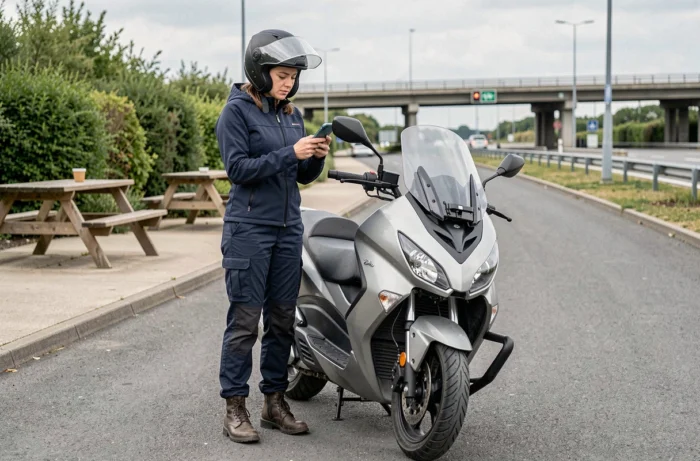
A check of levels (engine oil, coolant) and the tension of the belt or chain before a highway trip prevents breakdowns on the emergency shoulder, a situation particularly exposed on the highway.
Scooter insurance and highway coverage
50 cm³ and 125 cm³ scooters are not subject to the regulated bonus-malus system that applies to cars. Driving history is assessed differently: the insurer reviews the information statement, which lists claims from previous years.
Third-party insurance covers civil liability but not damage to the scooter in case of a fall or collision. On the highway, where impact speeds are high, coverage for the rider’s bodily injury is a choice not to be overlooked. Opinions vary on the necessity of enhanced theft coverage for highway trips, but bodily injury coverage is widely agreed upon among specialized two-wheeler brokers.
Riding a scooter on the highway remains a regulated practice that requires an appropriate vehicle, a valid license, and equipment in good condition. The legalization of lane splitting since early 2025 has clarified a whole aspect of the regulations, but it does not replace the constant vigilance that this type of road demands from an exposed rider.