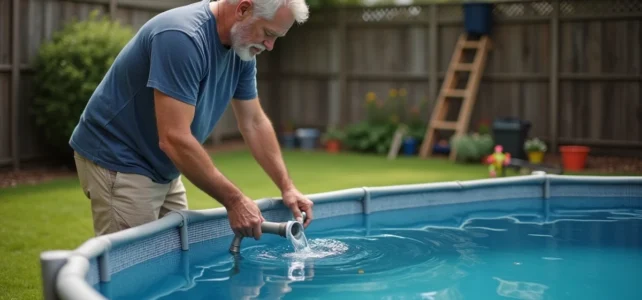
The hose is connected, water begins to flow into the pool, and a question arises: should it be filled to the top, stopped at three-quarters, or aimed at a specific marker? Filling an above-ground pool seems simple, but the water level directly affects the filtration system, the stability of the structure, and the quality of swimming throughout the season.
Preparing the ground before filling: excavate rather than compensate
Have you ever noticed that an above-ground pool tilts slightly to one side after a few days? The problem rarely comes from the pool itself. It comes from the ground beneath.
Most guides recommend placing the pool on flat ground. This advice is correct but incomplete. Excavating the high area of the ground is more reliable than filling the low area with loose soil or gravel. A fill, even compacted, will settle under the weight of the water and create a gradual imbalance. The pool deforms, the liner experiences uneven tension, and the waterline becomes visibly sloped.
The correct method is to remove the excess soil from the highest side, then check the level with a spirit level across the entire surface. If you place your pool on grass, be aware that the grass beneath the pool will rot in a few weeks, weakening the base and causing odors. A base of compacted sand or a geotextile fabric laid on excavated ground provides a much more stable foundation.
Understanding when to fill your above-ground pool according to Youpi La Maison helps anticipate these preparation steps even before turning on the tap.
Ideal water level for an above-ground pool: the skimmer marker
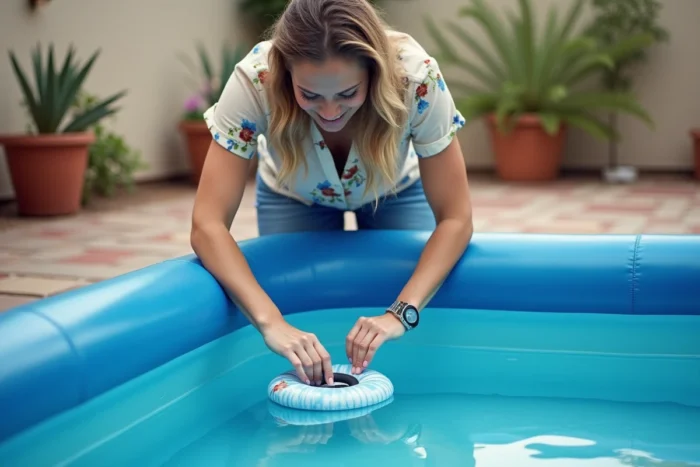
The correct water level is neither the maximum nor a fill by eye. The water should reach halfway up the skimmer opening, sometimes slightly above. This marker is not arbitrary: it ensures that the skimmer properly sucks in surface debris while avoiding air intake that can damage the pump.
Too low: the pump suffers
If the water drops below the bottom of the skimmer, the pump sucks in air. It runs dry, overheats, and its lifespan decreases rapidly. In an above-ground pool equipped with a compact filtration unit, this type of dry operation can cause a breakdown in just a few hours.
Too high: the filtration no longer filters
Conversely, a water level that is too high prevents the skimmer from creating a suction effect at the surface. Leaves, insects, and greasy films remain floating instead of being captured. The pool may look clean at depth but the surface remains dirty, and chlorine treatment loses effectiveness.
Checking the water level once a week is a habit to adopt, especially in summer. Evaporation can lower the level by several centimeters in just a few days, depending on sun and wind exposure.
Gradual filling and real-time liner adjustment
Filling an above-ground pool is not done all at once. The gradual rise in water plays a technical role that many owners discover too late.
During the first few centimeters of filling, the liner presses against the walls and the bottom. It is at this precise moment that you need to intervene to smooth out the wrinkles by hand. A wrinkle trapped under the weight of the water cannot be corrected later. It creates a friction zone that weakens the lining and can cause a leak over the weeks.
Here are the concrete steps for a successful filling:
- Fill the first ten to fifteen centimeters, then stop the water to smooth the liner across the entire bottom surface.
- Resume filling in stages, checking that the liner conforms to the walls without forming air pockets or lateral wrinkles.
- Before reaching the skimmer level, check the seals and openings (return jet, skimmer intake) to ensure they are watertight.
- Complete the filling to mid-skimmer, then turn on the filtration to check the suction.
A well-fitted liner from the start lasts several more seasons than a wrinkled liner. This action takes about twenty minutes and avoids costly replacements.
Water restrictions and pool filling: what the regulations say in 2026
Filling an above-ground pool is not always allowed. Prefectural orders for water restrictions multiply during the summer, and the rules vary depending on the alert level declared in your department.
In a crisis level, filling and topping up are prohibited, except for safety-related imperatives concerning the structure. In a reinforced alert, topping up is generally tolerated but the initial filling may be restricted. In simple vigilance, filling is allowed with an encouragement for moderation.
Before connecting the hose, check the drought vigilance map for your department. Fines for non-compliance with a restriction order exist and apply to above-ground pools as well, not just to in-ground pools.
Municipal water, well water: not the same treatment
Municipal water arrives already disinfected and with a relatively stable pH, which facilitates initial treatment. Well water, on the other hand, may contain iron, manganese, or excess limestone that disrupts the chemical balance of the pool and clogs the filtration system.
If you use well water to fill your above-ground pool, a prior analysis of hardness and pH is recommended. Without this check, chlorine treatment may be ineffective and the water can turn green or brown within the first few days.
Ultimately, filling an above-ground pool hinges on three parameters: an excavated and stable ground, a water level set to mid-skimmer, and a gradual rise that allows for liner adjustments before it’s too late. Checking the current restrictions in your municipality before any filling remains the first reflex to adopt each season.