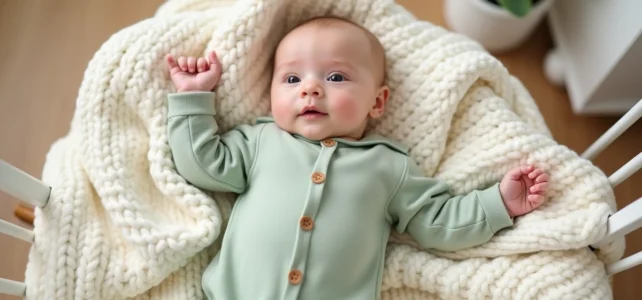
A cotton bodysuit, a floral-patterned overall, a small knitted hat: baby clothes have never been so varied. Choosing trendy and comfortable clothes for babies in 2024, however, requires going beyond visual appeal.
An infant’s skin is significantly thinner than that of an adult. It reacts to friction, dyes, and synthetic fibers. Starting with materials and cut before considering style is the only method that lasts over time.
OEKO-TEX Class I Certification: The Starting Filter for Baby’s Skin
Have you noticed that some bodysuits display a small round logo with the mention “OEKO-TEX”? This label is not just a marketing argument. OEKO-TEX Standard 100, Class I certification is the minimum recommended for any textile worn directly against an infant’s skin. It guarantees that the fabric has been tested for harmful substances specifically for babies.
Class I is the strictest of the four classes in the standard. It covers items intended for children under three years old. The tolerance thresholds for heavy metals, phthalates, or formaldehyde are much lower than for adult clothing.
In practical terms, when you compare two pajamas at the same price, the one with this certification gives you a verifiable guarantee. At Les Bébés Fringueurs, the collections offered incorporate this type of requirement regarding materials, which simplifies sorting for busy parents.

Cotton, Linen, Bamboo: Which Materials for Everyday Comfort
Cotton remains the reference fiber for dressing a baby. Breathable, soft, and easy to wash at high temperatures, it withstands repeated spit-ups and machine washes. Organic cotton, grown without synthetic pesticides, further reduces the risk of irritation.
Other materials are gaining ground. Linen, rarer in childcare, offers appreciated natural thermoregulation in summer. Bamboo fiber fabric, very soft to the touch, absorbs moisture well. Each material has its limits: bamboo often requires a chemical processing method that can diminish its advertised ecological benefits.
How to choose between these options? Ask yourself a simple question: at what temperature will my baby wear this garment? For winter, a thick cotton bodysuit or a cotton-wool blend is suitable. For summer, a fine cotton or linen keeps the body cool.
- GOTS certified organic cotton ensures control over the entire production chain, from cultivation to dyeing.
- Untreated linen naturally regulates temperature, ideal for hot days without air conditioning.
- Cotton-elastane blends make it easier to dress a wriggling baby, provided the percentage of synthetic remains low.
Dressing Baby According to Temperature: The Layering Rule
A baby does not regulate its body temperature as well as an adult. The most reliable method is to layer thin layers rather than a single thick garment. This approach allows for quick adjustments if the baby is too hot or too cold.
In cold weather, a long-sleeved bodysuit forms the first layer. Over it, a pajama or a cotton fleece suit. Then a sleep sack appropriate for the room temperature. Outside, a coat or a snowsuit completes the outfit.
In Summer, Less is More
When the temperature exceeds comfort levels, a simple short-sleeved bodysuit is sufficient indoors. Outside, a wide-brimmed hat and a lightweight garment covering the arms protect the skin from the sun. A baby who is too hot sweats in the neck and upper back: touch these areas to check.
The 2024 trend for lightweight zippered suits meets this need for quick layering. They allow for a change in a few seconds, without pulling the garment over the head.
Cuts and Closures: What Makes the Difference Between Trendy and Practical
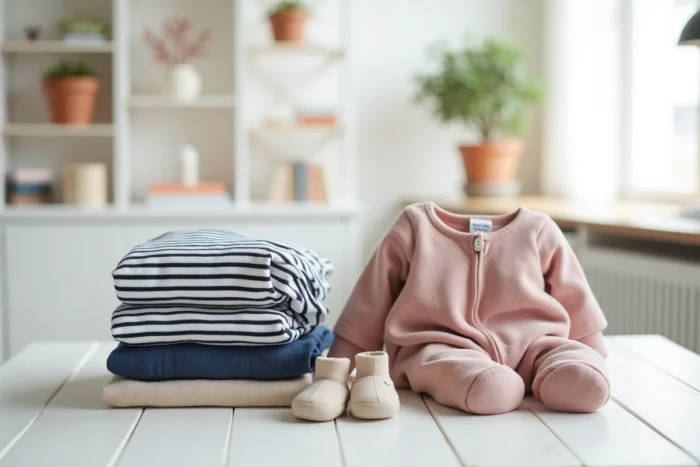
A baby garment can look beautiful on a hanger but be a hassle to put on. Snap buttons at the back, overly tight collars, rigid jeans with miniature zippers: these are aesthetic traps that complicate daily life.
Why does this choice matter so much? Because an infant is changed several times a day. A bottom opening or a snap system at the crotch transforms a five-minute change into a thirty-second operation.
- American necklines (crossed at the shoulders) widen to easily slip over the head.
- Snaps at the crotch prevent the need to fully undress the baby to change the diaper.
- Elastic bands at the waist replace belts or buttons on pants advantageously.
- Zipper closures with zip guards protect the chin and belly skin.
On the trendy side, soft jersey overalls and graphic print suits combine style and practicality. Terracotta, sage, and mustard colors dominate the 2024 collections, but the choice of cut remains more decisive than the palette.
Digital Traceability: An Emerging Criterion for Baby Clothes
The digital product passport is starting to spread in the children’s world. The principle: a QR code on the label provides access to the origin of the materials, certifications, and any product recalls. This logic, already in place in furniture and toys, can be transposed to baby textiles in the short term.
Digital traceability will become a concrete selection criterion for parents who want to verify what they are buying, beyond the printed mentions on the packaging. Some pioneering brands already offer direct access to composition sheets via a smartphone scan.
This type of transparency helps distinguish a truly controlled garment from an item whose label is merely decorative. For parents, it saves time and builds trust at the time of purchase, whether in-store or online.
Choosing baby clothes in 2024 comes down to balancing three concrete criteria: material certification, ease of dressing, and temperature adaptation. Style naturally follows when these foundations are solid. Brands that focus on traceability and cuts designed for daily changes are ahead of those that only sell pretty patterns.