Fashion and music share a common language: that of visual identity. Some artists do not just wear clothes; they build a personal aesthetic that influences creators, trends, and sometimes entire generations. This ranking of the most stylish artists in the world is based on a simple criterion: the real impact of their style on the fashion industry, beyond just the red carpet look.
1. Rihanna: fashion as a playground for experimentation
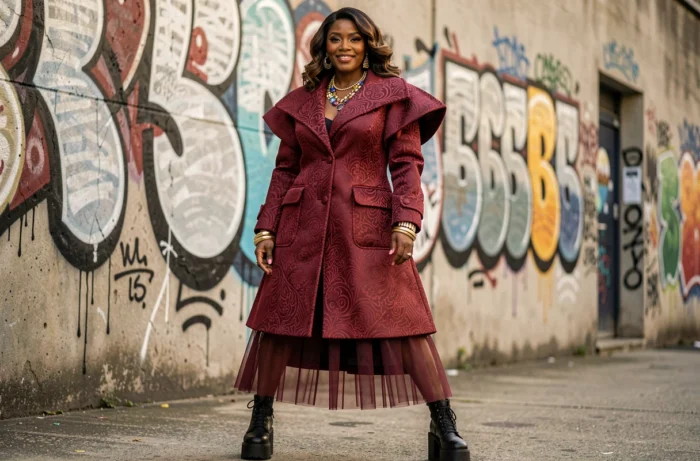
Rihanna has made clothing an extension of her music. Each public appearance presents a strong stance: extreme volumes, mixes of streetwear and haute couture, references to Caribbean culture. Her Fenty brand has shaken up the codes of luxury by placing inclusivity at the center of the project.
Her influence goes beyond the wardrobe. She has redefined the relationship between artist and fashion house by becoming a creator, not just an ambassador. Designers regularly cite her looks as starting points for collections. To learn more about Sparh, which details these dynamics between artists and fashion, the case of Rihanna perfectly illustrates this fusion.
2. Charli XCX: brat style versus quiet luxury
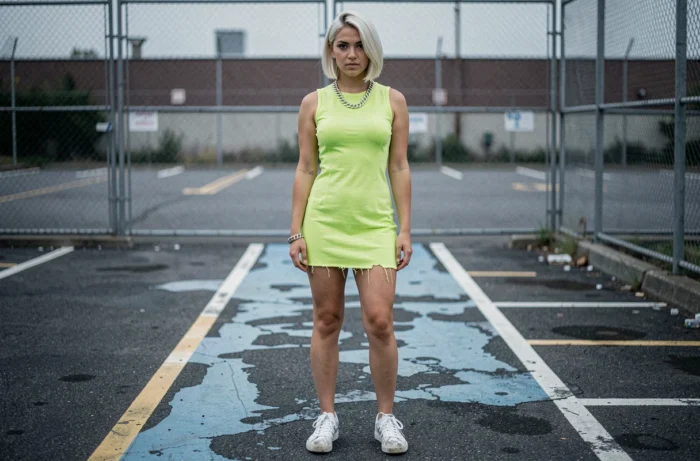
Charli XCX has built her recent aesthetic as an ideological statement. The brat style, born around her album of the same name, directly opposes quiet luxury: mini shorts, worn bags, black and acid green. It is a fully embraced “bad kid” aesthetic, conceived as a reaction to the sobriety of discreet luxury.
In 2026, her album Music, Fashion, Film takes the approach further. The cover does not show Charli XCX but three guiding figures: John Cale for music, Marc Jacobs for fashion, and Martin Scorsese for film. Marc Jacobs was chosen because he gave her her first fashion campaign. This approach, where the artist steps back behind her references, remains rare in pop.
3. David Bowie: the invention of the character-clothing
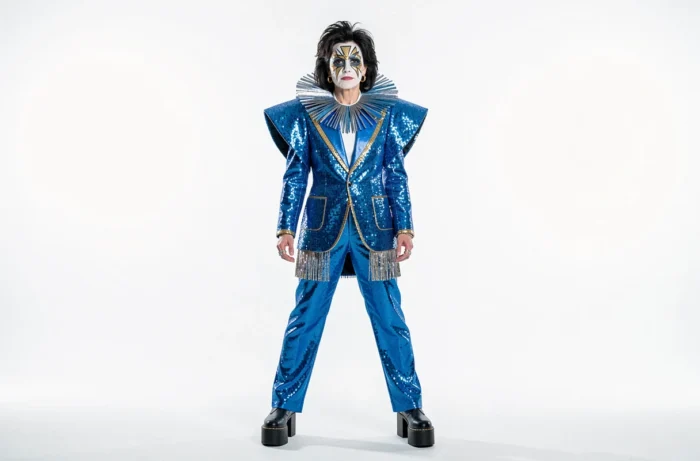
Before Bowie, few musicians radically changed their appearance with each album. Ziggy Stardust, Aladdin Sane, the Thin White Duke: each period corresponds to a complete wardrobe, often designed with creators like Kansai Yamamoto.
Bowie invented the concept of disposable fashion identity, now adopted by nearly all pop stars. His influence on houses like Dior Homme or Saint Laurent is well documented in the archives of these houses.
4. Pharrell Williams: from streetwear to artistic direction at Louis Vuitton
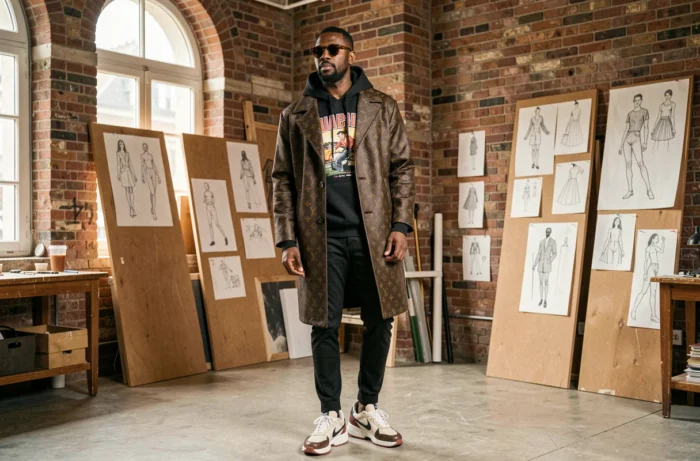
Pharrell has come the full circle: from his first trucker hats to the artistic direction of the men’s line at Louis Vuitton. His brand Billionaire Boys Club helped legitimize streetwear in luxury circles.
What sets Pharrell apart is his ability to mix skate culture, contemporary art, and Parisian couture without the result feeling forced. His collections for Vuitton incorporate references to Africa, hip-hop, and the art of Takashi Murakami.
5. Vivienne Westwood: punk as fashion grammar
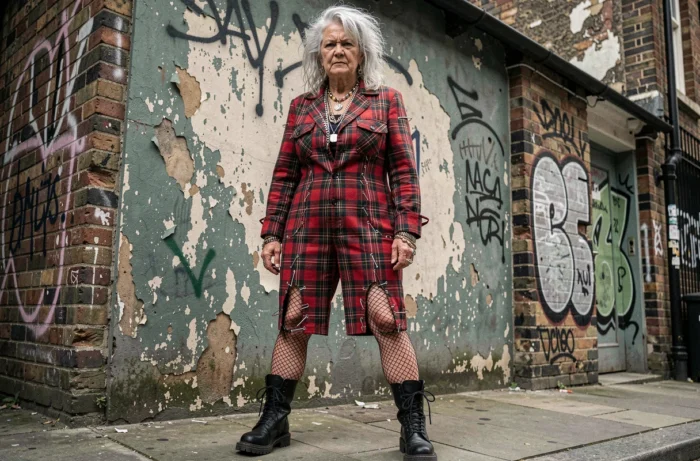
Westwood was not just a designer; she embodied her own manifesto. Deconstructed tartan, corsets worn as armor, political messages embroidered on clothing. Her personal style and collections formed an inseparable whole.
She proved that clothing can be a pamphlet. Designers who today blend commitment and aesthetics, from Marine Serre to Demna Gvasalia, directly extend her lineage.
6. A$AP Rocky: haute couture serving rap
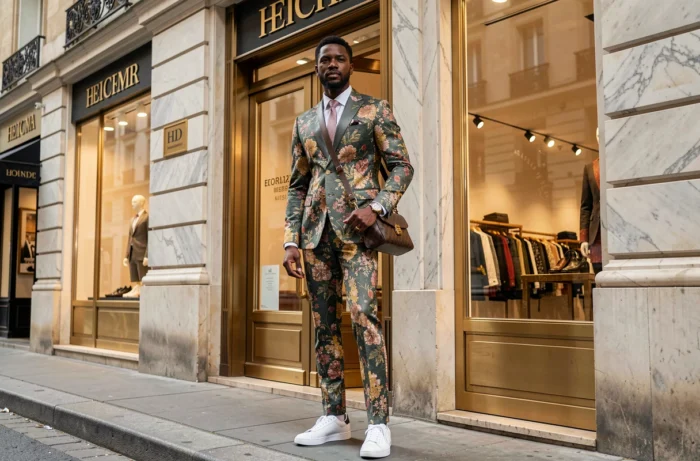
A$AP Rocky was among the first rappers to openly wear pieces from European houses like Dior, Raf Simons, or Margiela. His approach is based on one principle: each outfit tells a specific cultural story.
He does not follow trends; he anticipates them. His taste for luxury vintage, archive pieces, and collaborations with niche brands has created a bridge between American rap and European fashion that many have imitated since.
7. Björk: clothing as a living sculpture
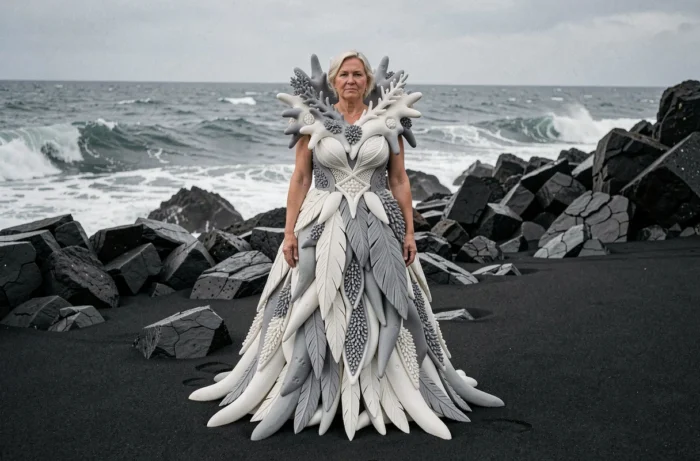
The swan dress from the Oscars remains in everyone’s memory, but Björk’s style goes far beyond provocation. Each album comes with a total visual universe, designed with creators like Alexander McQueen or Iris van Herpen.
Björk treats clothing as an extension of her music: organic, technological, sometimes uncomfortable. Her choices have paved the way for more experimental fashion on the red carpets.
8. Kanye West: from Yeezy to anti-fashion
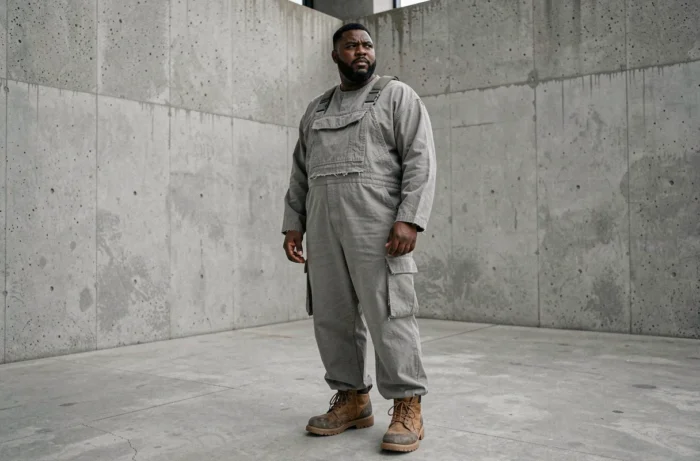
Kanye West’s influence on fashion remains massive, despite controversies. Yeezy popularized oversized silhouettes and neutral tones in global streetwear. His minimalist approach has directly influenced the direction of luxury casual.
His recent trajectory towards deliberately raw looks (masks, clothing without visible branding) illustrates a shift towards anti-fashion, a movement that questions the very notion of style.
9. FKA Twigs: performance as wardrobe
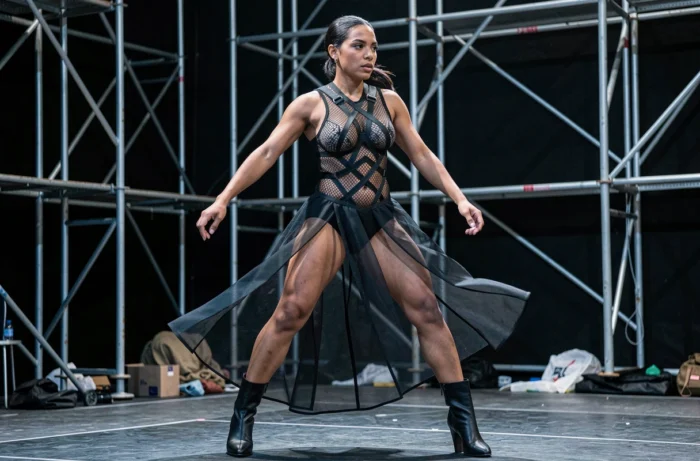
FKA Twigs merges dance, body art, and fashion in each of her appearances. Her collaborations with creators like Ed Marler or Rick Owens produce looks that function as performance costumes.
Her style refuses to separate stage from daily life. Cut-out clothing, technical materials, and sculptural accessories form a coherent visual language that influences avant-garde fashion.
10. Solange Knowles: art, Africa, and color as signatures
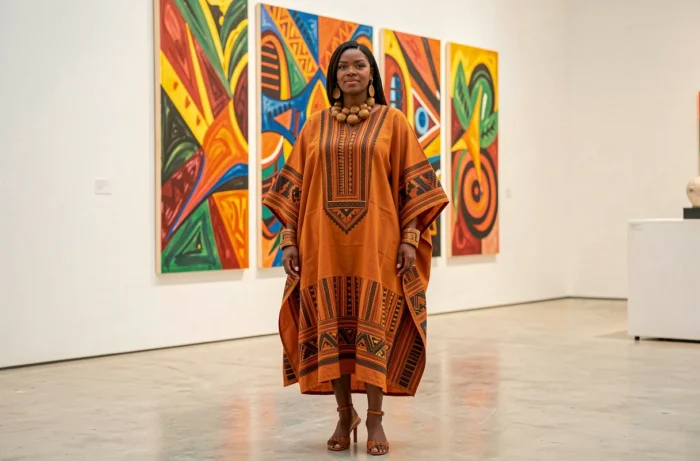
Solange does not choose clothes; she composes tableaux. Her looks favor blocks of color, African-inspired prints, and independent creators. Each public appearance is conceived as a visual installation.
Her work with visual artists for her music videos and performances shows that fashion can serve as a complete artistic language, not just a promotional accessory. She embodies an approach where personal style and creative process are one.
These ten artists share a common point: their style is never decorative. It extends a vision, a discourse, sometimes a struggle. For them, fashion is not a side aspect of their musical or artistic career; it is a medium in its own right.