
The motorcycle regulatory framework makes no distinction by gender, but ergonomic and morphological constraints require different technical choices from the very first equipment. Starting to ride a motorcycle as a woman means mastering three parameters often poorly addressed by general guides: the sizing of the machine, the actual compliance of the protections, and the management of the center of gravity at low speed.
Seat Height and Center of Gravity: Technical Criteria Ignored by Motorcycle Guides
The raw seat height, often the only figure looked at in dealerships, is not enough. Two motorcycles displaying the same measurement can offer radically different ground support depending on the seat width at its narrowest point and the position of the center of gravity.
We recommend checking the seat width at the sitting point, which determines the gap between the feet on the ground. A narrow seat on a lightweight trail can easily compensate for two additional centimeters in height compared to a roadster with a wide seat. The weight in running order also comes into play: a heavy machine with a high center of gravity is less forgiving of imbalances when stopped than a lighter model, even if it is perched.
For riders below one meter sixty-five, models with adjustable rear suspension preload allow lowering the rear without altering the steering geometry. Some brands offer low seats as factory options, which avoids the need for a saddler. Specialized resources like missdeuxroues.fr document these configurations tailored to female morphologies.
Mandatory Motorcycle Equipment in France: The Legal Basis 2026
The French regulatory framework imposes three pieces of equipment, no more. Everything else falls under recommendation, no matter how relevant it may be. Confusing the two levels exposes one to poorly prioritized purchases.
- A helmet certified ECE 22-05 or ECE 22-06 depending on its market release date, mandatory for both the rider and the passenger.
- CE-certified gloves compliant with the EN 13594 standard, again for anyone on board the motorized two-wheeler.
- A high-visibility vest present on the vehicle, to be worn in case of emergency stop.
Boots, jacket, back protector, reinforced pants: none of these pieces of equipment are mandated by law in France in 2026. No regulatory evolution is announced on this point. This does not mean they are secondary, but their absence does not constitute an offense.
Women’s Helmet: Fit and ECE 22-06 Standard
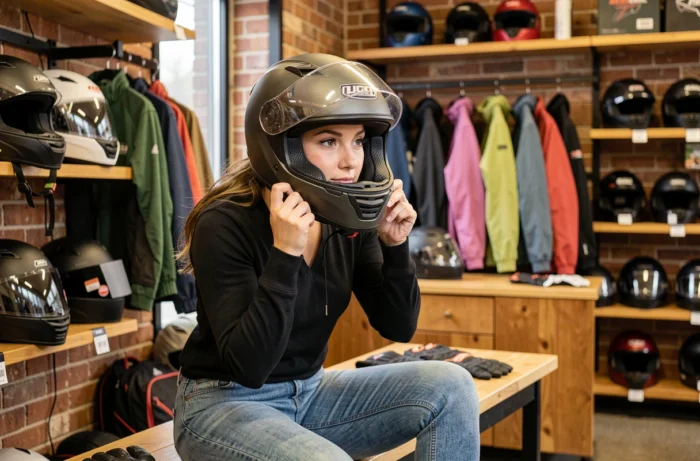
The ECE 22-06 standard, more recent, incorporates testing protocols at additional impact angles compared to 22-05. When trying on, a properly sized helmet should not pivot laterally when turning the head, even with the chin strap detached. XS and S size shells, more common among women, must be shells specifically sized for these sizes and not just M shells with thicker padding.
Check the label sewn into the inner shell: it mentions the applicable standard and the shell size. Two helmets of the same outer size can have different shells, which affects weight and protection.
Motorcycle Gloves Certified EN 13594: Check Before Buying
The majority of motorcyclists wear gloves, but a significant portion uses models that do not comply with the EN 13594 standard. The CE label alone is not enough: it must be accompanied by an explicit reference to this standard. City leather gloves, even thick ones, do not meet the abrasion and cut resistance requirements of the reference.
For smaller hands, the cut of women’s gloves differs from the reduced men’s cut. Brands that offer specific patterns provide better support for the protective shells on the metacarpals and phalanges. A glove that is too loose, even if certified, loses part of its effectiveness in case of a slide.
First Road Rides: Weight Management and Low-Speed Braking
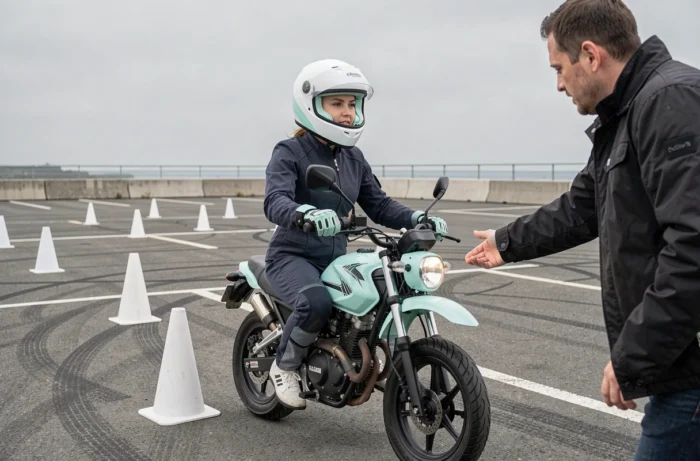
Almost all falls by beginners occur at speeds below ten kilometers per hour. Parking maneuvers, U-turns, stops on a slope: these situations engage the upper body to stabilize a mass that can far exceed the weight of the rider.
Two technical points make a difference during the first months:
- Looking far ahead in the direction of the turn or U-turn, never at the front wheel. The natural reflex to look at the obstacle or the nearby ground causes a tightening of the trajectory and an imbalance.
- Using the rear brake in slow maneuvers, not the front. The rear brake stabilizes the motorcycle by “pulling” it down. The front brake, applied too hard at low speed, compresses the fork and destabilizes the whole.
- The clutch play in the slipping zone, combined with a slight throttle, to maintain a constant torque that prevents jolts. This is the technique that takes the longest to acquire but is the most useful in urban daily life.
Post-license training, even if not mandatory at this stage, allows practicing these maneuvers on a closed course in a supervised setting. We observe that female riders who dedicate two to three specific sessions to slow handling progress faster on the road than those who accumulate kilometers without this prior work.
Adapting the Motorcycle Rather Than Compensating Physically
Adjusting the rear shock preload to the actual weight of the equipped rider, lowering the brake and clutch levers for natural two-finger access, adjusting the throttle grip travel: these basic adjustments, rarely made at the dealership during delivery, transform the machine’s behavior. A handlebar with levers that are too far away fatigues the forearm and delays reaction time when braking.
The choice of a first motorcycle hinges on these interface details more than on power or brand. A well-adjusted machine for its rider is better than a prestigious model delivered in standard configuration.