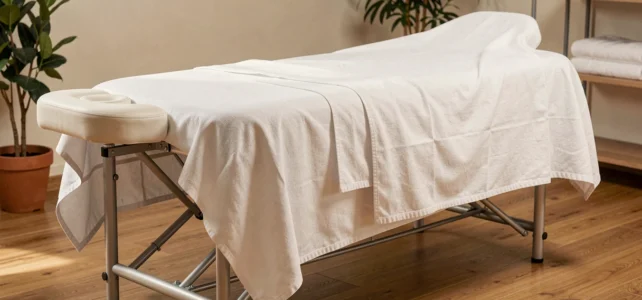
The market for professional massage tables has segmented in recent years into folding, fixed, and electric models. For a practitioner investing in their daily work tool, the choice is not just a matter of budget. The density of the foam, the type of structure, regulatory compliance, and long-term ergonomics weigh as heavily as the displayed price.
European MDR Regulation and Massage Tables: A Blind Spot in the Market
Most buying guides treat the massage table as a mere piece of furniture. This approach ignores a changing regulatory framework. Tables used in a medical context (physiotherapy, sports medicine, rehabilitation) can be classified as medical devices under the European MDR regulation 2017/745.
This regulation, with compliance deadlines extending to 2027-2028, imposes specific CE marking, enhanced technical documentation, and traceability of components on manufacturers. For the practitioner, this means that not all tables sold in Europe meet the same requirements depending on their declared use.
A wellness masseur is not subject to the same obligations as a physiotherapist. However, an osteopath or sports doctor using a non-compliant MDR table exposes themselves to legal risks in case of an incident. Before purchasing, it is essential to check whether the manufacturer declares their product as a medical device or as professional furniture, as the guarantees and responsibilities differ.
Practitioners wishing to compare models suitable for their activity can visit the professional page of La Table De Massage to refine their search according to their status and practice framework.
Electric Massage Table: A Standard for High-Volume Practices
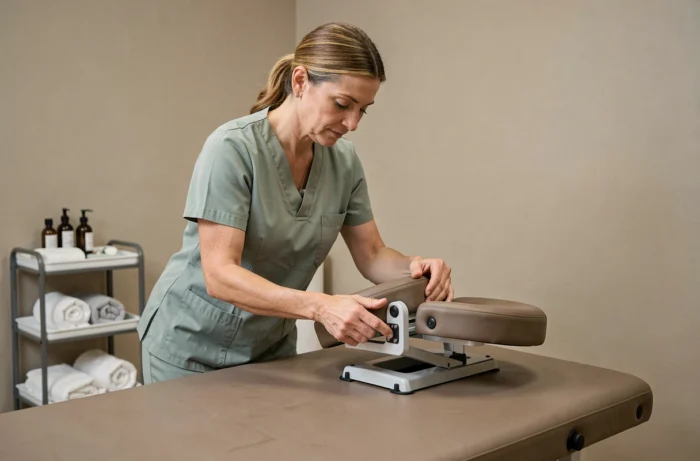
Since 2024, the electric massage table has become the reference equipment in practices receiving multiple patients per day. The motorized height adjustment significantly changes daily practice, well beyond mere comfort.
The time saved between two consultations is the first measurable argument. A practitioner who manually adjusts their table for each patient loses several minutes per session. Over a day of eight to ten consultations, this accumulated time impacts the schedule.
The ergonomics of the masseur is another decisive factor. Musculoskeletal disorders related to improper working height affect a significant portion of mid-career practitioners. An electric table allows for adjusting the position for each technique (deep pressure, effleurage, mobilization) without straining the back or shoulders.
For individuals with reduced mobility, height adjustment facilitates transfers from a wheelchair. This point is not trivial: it conditions the accessibility of the practice and may constitute an obligation depending on the type of establishment.
Field feedback varies on the reliability of motors according to price ranges. Entry-level models often use a single motor for height adjustment, while high-end tables offer independent motors for height, backrest, and sometimes leg sections. A single motor is sufficient for most wellness massage practices, but practitioners who combine multiple disciplines benefit from investing in a multi-motor model.
Foam, Covering, and Client Comfort: The Details That Make a Difference
The comfort of the mattress directly determines the quality perceived by the client. Two parameters matter more than others: the density of the foam and the thickness of the covering.
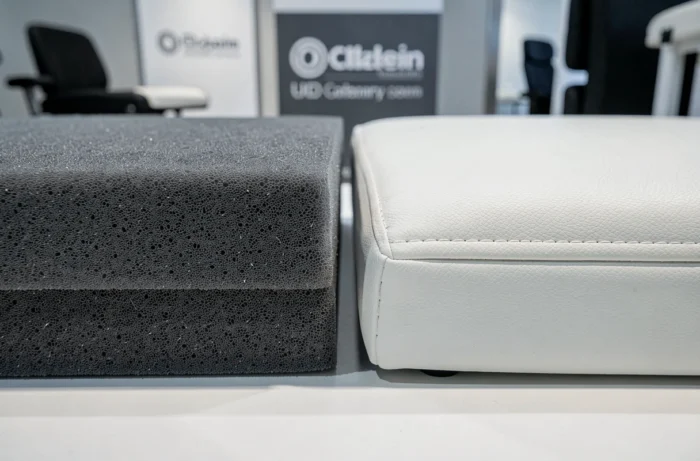
- A high-density foam retains its shape after thousands of uses. Low-quality foams sag within months, creating uncomfortable dips that degrade the client experience and complicate the masseur’s work.
- PU synthetic leather covering remains the most common for its resistance to massage oils and ease of cleaning. Cheap synthetic leathers crack quickly, especially in heated environments or those exposed to UV.
- The thickness of the mattress varies by model. A mattress that is too thin tires the client in prolonged positions, while a mattress that is too thick reduces the precision of the practitioner’s pressures. A medium-thickness mattress offers the best compromise between comfort and technical work.
Aluminum or Wood Folding Table: What Weight Changes in Practice
The choice of structure primarily depends on the mode of practice. A mobile practitioner transporting their table several times a week does not have the same constraints as a professional established in a fixed practice.
Aluminum reduces the total weight by several kilograms compared to wood. On a daily route with stairs, distant parking, or public transport, this difference is felt from the first week. Maple, the most commonly used wood for high-end folding tables, offers better stability and absorbs vibrations better during massage.
- Aluminum is suitable for mobile practitioners who prioritize lightness and quick setup.
- Wood (maple, beech) is suitable for sedentary or semi-mobile practitioners who seek rigidity and durability.
- Hybrid models (aluminum legs, wooden top) attempt to combine both advantages, with variable results depending on the manufacturers.
The headrest also deserves special attention. Models with integrated facial cavities limit adjustments, while removable and adjustable headrests adapt to each client’s morphology. For long sessions, a well-designed headrest prevents cervical pain that spoils the experience.
Choosing a professional massage table commits the practitioner for several years. Regulatory criteria, daily ergonomics, and material quality weigh more than the catalog price. Physically testing a model before purchase, checking MDR compliance if the use is medical, and anticipating the evolution of one’s practice remain the three most reliable reflexes to avoid a poor investment.