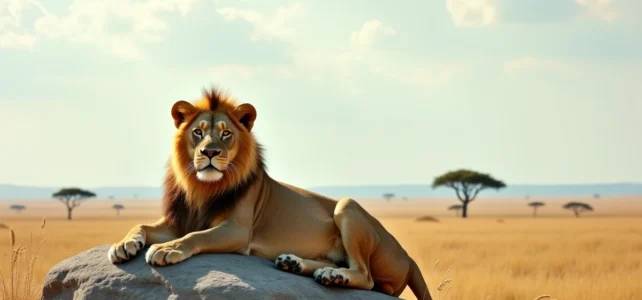
The African savanna refers to a tropical biome characterized by a dominant herbaceous layer, dotted with spaced trees, subjected to a marked alternation between dry and rainy seasons. This climatic alternation structures the distribution and behavior of wildlife over millions of square kilometers, from East Africa to the southern plains of the continent. Understanding the animals of the savanna requires going beyond a simple list of species to grasp the mechanisms that link each animal to its environment.
Pressure on Migratory Ungulate Populations in the Savanna
Competitors willingly treat large herds of wildebeests and zebras as a guaranteed spectacle. The reality documented by the IUCN after 2015 is more nuanced: several subpopulations of giraffes have moved into threatened categories on the Red List, and the numbers of wildebeests and zebras show a downward trend in some East African ecosystems since the early 2010s.
Three main factors explain this decline:
- Habitat fragmentation, linked to agricultural expansion that fragments migration corridors and prevents seasonal movements over long distances.
- Targeted poaching for bushmeat, which affects species sometimes considered abundant but whose local numbers are declining without sufficient monitoring.
- Growing human demographic pressure on the outskirts of national parks, which reduces buffer zones between protected areas and cultivated land.
These dynamics are transforming the savanna into a space where observing a large migratory herd is no longer automatic. Serengeti National Park in Tanzania remains one of the few sites where circular migration persists on a large scale.
To better identify the animals in the African savanna, it is essential to consider these pressures that continuously reshape the map of observable wildlife.
Big Five and Savanna Wildlife: Beyond the Tourist Catalogue
The term big five (lion, elephant, leopard, buffalo, rhinoceros) comes from colonial hunting vocabulary, which referred to the five most dangerous animals to track on foot. This classification has no ecological basis. It excludes species whose role in the ecosystem is at least as structuring.
The Lion, Apex Predator and Indicator of Ecological Health
The African lion occupies the top of the food chain in the savanna. Its presence in sufficient density signals a functional ecosystem, with enough herbivore prey and enough space to maintain clan territories. The local disappearance of the lion often leads to a proliferation of herbivores that overgraze the plant layer, altering soil composition and tree regeneration.
The Elephant, Architect of the Savanna Landscape
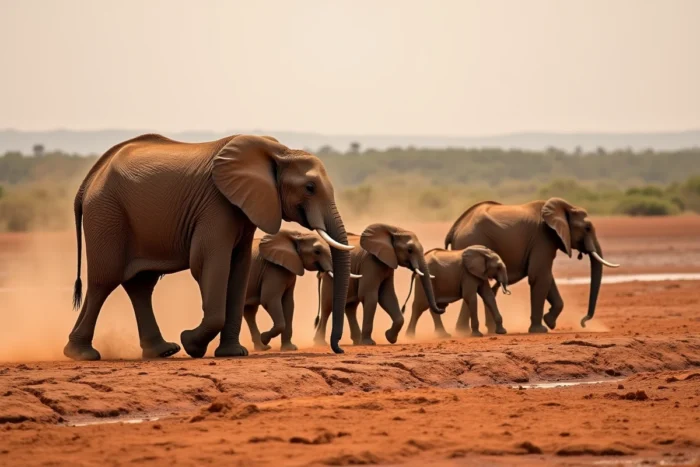
The African elephant does not merely traverse the savanna. By uprooting branches, tearing out shrubs, and digging temporary water points, it physically alters the structure of the environment. These interventions create micro-habitats exploited by dozens of other species, from insectivorous birds to small mammals.
An adult elephant consumes a considerable amount of vegetation each day. This browsing pressure, when populations are concentrated in fenced parks, can become destructive. Managing elephant density in southern African reserves remains one of the most complex dilemmas in conservation.
The Rhinoceros, Species Under Maximum Pressure
The black rhinoceros is among the most poached species in the world. The demand for its horn, fueled by illegal markets, has led to a collapse of its numbers over several decades. Translocation programs between reserves attempt to maintain sufficient genetic diversity to avoid local extinction.
Community Reserves in Africa: A Model Changing Wildlife-Human Coexistence
Since the mid-2010s, several countries in East and Southern Africa have expanded or created community conservancies. The principle is based on the direct involvement of local populations in the management and revenues generated by wildlife.
In Kenya, this model has allowed for an increase in protected areas well beyond the boundaries of traditional national parks. Maasai communities, for example, provide grazing land that serves as migratory corridors for zebras, wildebeests, and elephants between seasons.
The direct economic interest of communities measurably reduces poaching. When a living elephant generates more revenue through tourism than a dead elephant, the logic of protection establishes itself without the need for permanent militarized surveillance. This model does not solve everything, particularly the issue of conflicts between wildlife and livestock, but it represents a concrete evolution compared to the scheme of parks managed exclusively by the state.
Little-Known Species of the African Savanna and Underestimated Ecological Role
Safari articles often focus on large mammals. However, the savanna is home to intermediate wildlife whose ecological role conditions the survival of more visible species.
The lycaon (African wild dog) is one of the most efficient predators on the continent, with a hunting success rate significantly higher than that of the lion. Its cooperative packs regulate populations of small and medium ungulates, limiting localized overgrazing. The lycaon is among the most threatened carnivores in Africa, with numbers estimated at a few thousand individuals in the wild.
The vulture, often perceived as a mere scavenger, provides a direct sanitary service by eliminating carcasses before they become disease hotspots. Several species of African vultures have seen their populations dramatically decline, notably due to indirect poisoning from pesticides and toxic baits aimed at livestock predators.
The ground pangolin, discreet and nocturnal, regulates populations of termites and ants. Its intensive poaching for Asian markets makes it the most trafficked mammal in the world, according to data compiled by organizations monitoring illegal wildlife trade.
The African savanna is not just about its photographic stars. The stability of this ecosystem depends on a network of interdependent species, from the most visible to the most discreet, and the disappearance of each link weakens the whole in often irreversible ways.