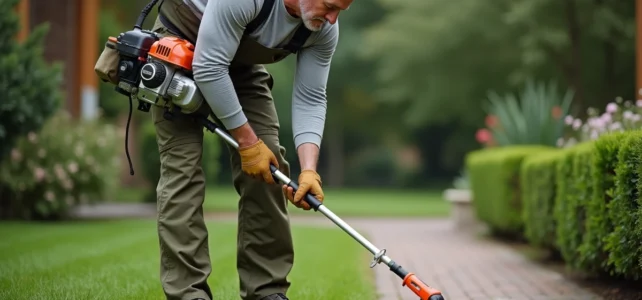
A thermal string trimmer is a motorized tool equipped with a gasoline engine (two-stroke or four-stroke) that drives a rotating cutting head with either a line or a blade. Its main feature compared to electric or battery versions is its continuous autonomy, without cables or recharging, and its ability to maintain constant cutting power even on very dense grass or large areas.
Cutting line and reload head: the criterion that most guides overlook
The choice of line directly affects the cutting quality and the lifespan of the string trimmer. A too small line diameter when faced with tough vegetation causes premature wear of the head and the engine, which is constantly under strain.
The cross-section of the line is just as important as its diameter. A round line is suitable for fine grasses and finishing along paths. For thick grasses or woody weeds, a square or star-shaped line cuts more effectively because its edges create a shearing effect, whereas a round line merely tears.
Comparing several models on coupebordurethermique.fr allows you to check which diameter and profile of line each device accepts before purchase.
The cutting head also deserves special attention. There are two main families:
- Manual spool heads, where you have to unwind and cut the line yourself before reassembling the spool. Reliable, but reloading takes time and interrupts work.
- Semi-automatic bump heads (tap-and-go), which release line when you tap the head on the ground. The time savings are significant on large areas.
- Quick-load heads, which allow you to slide a section of line without disassembling the spool. This system reduces handling and minimizes line waste.
On a thermal model intended for a plot of several hundred square meters, a quick-load head prevents repeated stops that, when accumulated, significantly extend the edging session.
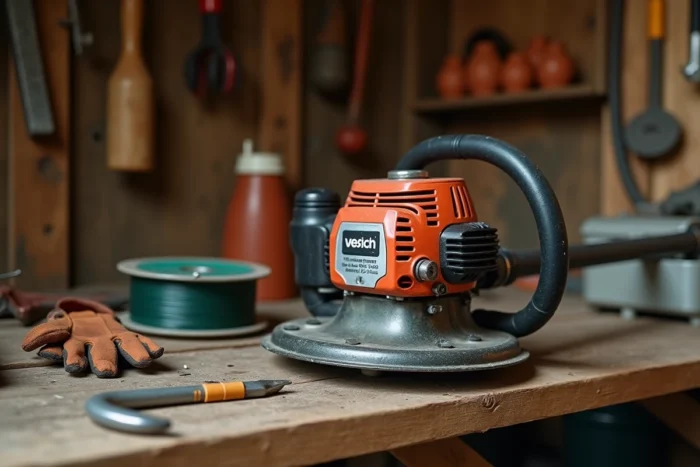
Two-stroke or four-stroke engine: power, weight, and user fatigue
The choice between a two-stroke engine and a four-stroke engine is not just about raw power. The weight of the device determines the fatigue felt after half an hour of work, and it is often this factor that makes the difference between a tool that is used regularly and one that remains at the back of the garage.
A two-stroke engine runs on a mixture of oil and gasoline. It is lighter for the same displacement, making it manageable for precise finishing around trees or along flower beds. However, it vibrates more and consumes more fuel.
A four-stroke engine runs on pure gasoline, with a separate oil reservoir. It is heavier, but produces less vibration and runs more smoothly. During long sessions (tall grass along fences, overgrown slopes), this smoothness reduces muscle fatigue in the arms and shoulders.
Cutting width and terrain relationship
The cutting width varies by model. A generous width speeds up work on straight edges but becomes a hindrance in tight spaces between closely planted areas. A versatile thermal string trimmer offers a cutting width suitable for the most frequently traversed paths in the garden, not for extreme cases.
For a structured garden with flower beds, paths, and tree bases, a medium cutting width remains the best compromise between speed and precision.
Steel blade on thermal string trimmer: when power requires precautions
Some thermal string trimmers accept a disc or steel blade in place of nylon line. This option is tempting for very dense grass or brambles, but it radically changes the conditions of use.
The projectiles are significantly more violent than with a line: stones, wood splinters, and fragments of stone edging can be propelled at high speed. The risk of impact in case of contact with a wall, stone, or protruding root is real and can damage the blade or cause a sudden recoil of the tool.
Enhanced protective equipment becomes mandatory with a steel blade: full-face visor instead of simple glasses, shin guards, anti-vibration gloves, and durable pants. Maintenance of the blade after each use (checking sharpness, inspecting the attachment) also adds to the maintenance time.

Nylon line or blade: which system for which result
For careful finishing around flower beds and paths, nylon line remains the most suitable choice. It cuts cleanly without risking damaging the bark of a tree in the process. The steel blade is justified in areas of overgrowth or very woody vegetation, in open terrain where the risk of projectiles towards others is controlled.
Maintenance of the thermal engine: what preserves power over time
A thermal string trimmer loses performance when its maintenance is neglected. Three points concentrate the majority of avoidable breakdowns:
- The air filter, which clogs quickly during cuts in dry or dusty terrain. A clogged filter impoverishes the air-fuel mixture and reduces power.
- The spark plug, whose fouling causes starting issues and power drops under load. Regular replacement according to the manufacturer’s recommendations eliminates this problem.
- The carburetor, which can go out of adjustment after a long period of winter inactivity. Cleaning and adjusting before the season prevents over-revving or unexpected stalling.
Draining the tank before prolonged storage prevents gasoline from degrading and leaving deposits in the fuel system. This action takes a few minutes and avoids a trip to the workshop the following spring.
The thermal string trimmer remains the reference tool for gardens where the area to be maintained, the density of vegetation, or the distance from an electrical outlet make other power sources less practical. Choosing the right line, the type of engine suited to one’s physical condition, and adhering to regular maintenance are as important as the power indicated on the technical sheet.