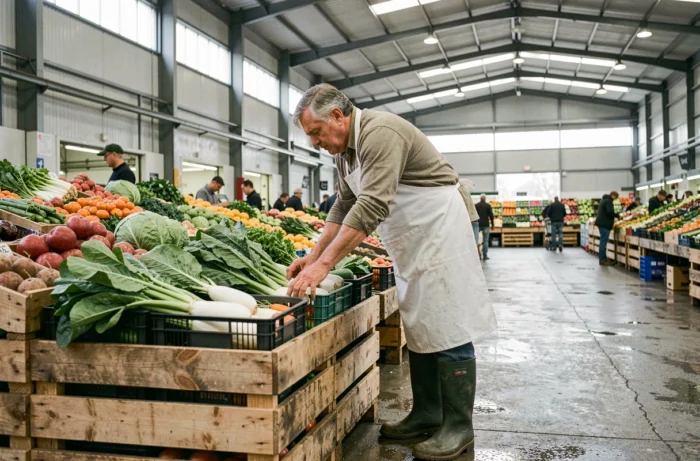
The Rungis Market occupies a secure site spanning several hundred hectares, accessible only through five toll gates located around the perimeter. A visit takes planning, whether you’re a restaurateur looking for suppliers or simply curious about food logistics. Access, pricing and the areas actually open to non-buying visitors deserve a sector-by-sector breakdown, not broad generalizations.
Opening hours by sector at Rungis: the detail guidebooks overlook
Market activity doesn’t follow a single opening time. The seafood market opens much earlier than the fruit and vegetable halls, while the meat and dairy pavilions operate during intermediate time slots. Professionals planning to combine a visit with sourcing need to map out their route sector by sector, or they may find some halls already winding down.
These differences in opening hours directly affect organized visits: guided tours set their departure times according to which sectors are busiest at the time. Very early departures focus on seafood and flowers, while slightly later slots head to the fruit and vegetable halls or gourmet food areas.
Details about the Rungis entry fee for professionals also vary depending on the type of card used and the day of the week, with specific rates on weekends.
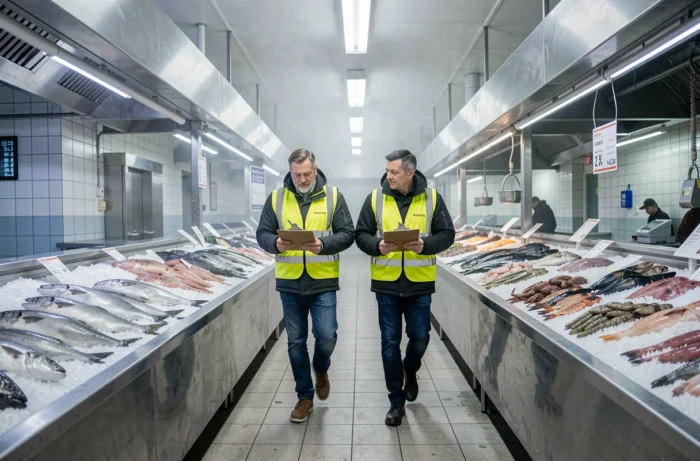
Rungis toll fees: buyer card versus single-entry ticket
There are two ways to enter through the toll gates. Professionals with a buyer card benefit from discounted rates; cards can be created online through the MyRungis platform. Without a card, visitors pay per entry directly at the gate, at a higher rate.
The difference isn’t just about price. A buyer card grants access to the pavilions to negotiate with wholesalers and purchase goods by the case. A single-entry ticket allows visitors to move around the site but does not automatically grant purchasing rights. Access to the site and the right to buy are two separate things.
Weekend and vehicle rates
Rates change from midday on Saturday through Sunday evening. The cost also depends on the type of vehicle: a refrigerated van and a passenger car don’t pay the same amount. Professionals who source products regularly should compare the cumulative cost of single-entry tickets with the subscription linked to the card.
Organized visits to Rungis for non-buyers: what you can actually see
Rungis Market isn’t a place for casual, unaccompanied visits. Individuals and professionals without a buyer card can access the site only as part of guided tours led by approved organizations. Booking is required, and the site’s rules are strictly enforced.
These tours allow visitors to walk through several pavilions, observe how the logistics operation works and meet wholesalers at their workplace. Visitors cannot purchase goods. The tour is supervised from start to finish.
Areas and activities included in a guided tour
- The seafood, fruit and vegetable, meat and cheese pavilions, depending on the time slot and route offered by the tour operator
- Behind-the-scenes logistics areas, including unloading docks and sorting areas, which give visitors a tangible sense of the volume handled each night
- Areas dedicated to food waste recovery and anaerobic digestion, an increasingly prominent environmental focus at the site that is sometimes included in newer tours
- Market restaurants, where visitors can enjoy breakfast or a meal after the guided tour
Tours can be tailored to different groups, including school groups, food service professionals and businesses. Durations vary, but the standard format lasts several hours in the early morning.
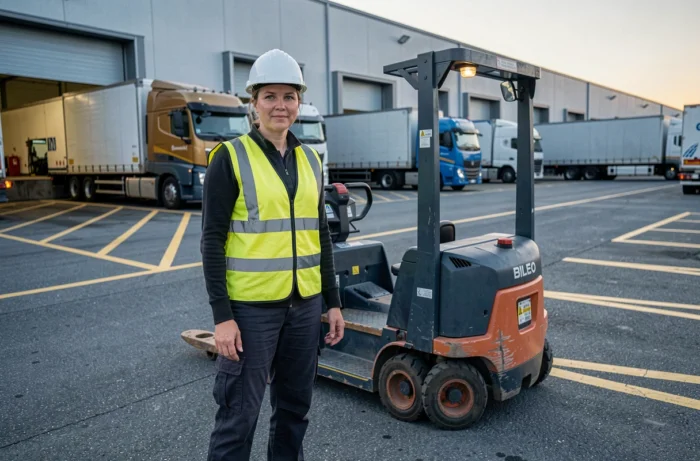
Professional sourcing at Rungis: the real cost beyond the entry fee
For a restaurateur or caterer, the toll fee is only a fraction of the total sourcing cost. Products are sold by the case, and buyers are responsible for arranging transport and maintaining the cold chain. A refrigerated vehicle, travel time, on-site parking and handling all add to the cost, alongside the price of the products themselves.
This logistical challenge explains why many professionals, even those with a buyer card, use intermediaries or online ordering platforms connected to Rungis wholesalers. A physical visit to the market makes the most sense when you want to inspect products in person, discover new suppliers or negotiate volumes.
Buyer card: who benefits from the investment?
The card is worthwhile for professionals who visit the market several times a month or more. For a one-off purchase or a simple exploratory visit, a single-entry ticket is enough. The approximately 1,200 businesses on site cover every food sector, from cut flowers to seafood, making a visit worthwhile when you’re looking to diversify your sourcing channels.
Whether you’re visiting as a professional or joining an organized tour as a non-buyer, Rungis Market requires planning around sectors and time slots. The distinction between access to the site and the right to buy—often blurred in general-interest guides—shapes the entire experience.